Loading content...
Loading content...
Loading content...
Loading content...
Loading content...

Loading content...
Loading content...
Loading content...
Loading content...
Loading content...
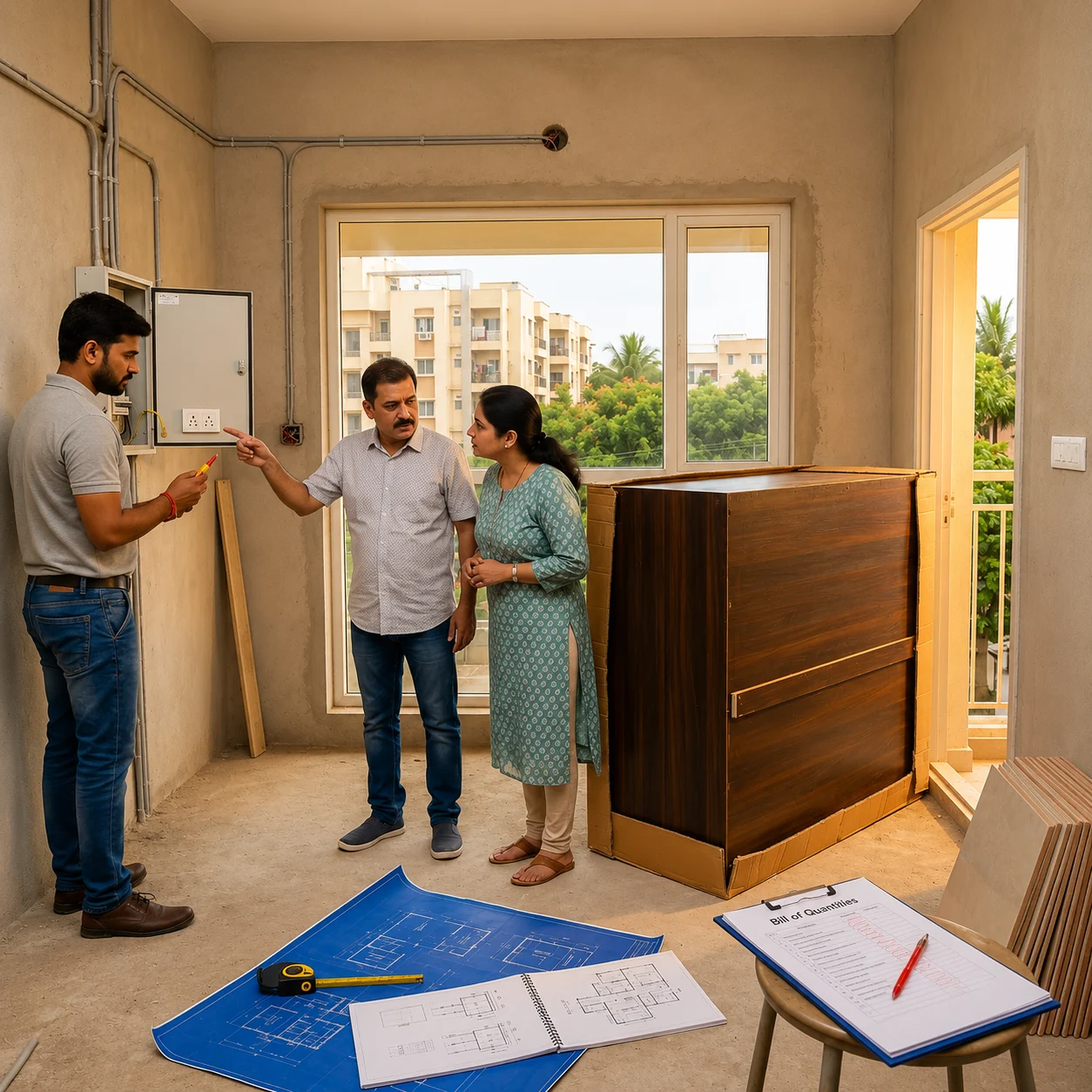
Before starting home interiors in Bangalore, most homeowners focus on choosing finishes, furniture, and colours. The bigger mistakes usually happen earlier before the first design is finalized or the first vendor steps on site. These early missteps are what turn a straightforward interior project into one full of delays, disputes, and unplanned costs.
Here are the five most common interior planning mistakes, and what to check instead.
| Mistake | What Usually Happens | What to Do Instead |
| No layout finalized before shopping | Furniture and fittings are bought first and may not fit the space properly | Finalize the layout and space plan before buying anything |
| Interior budget without a buffer | Costs rise mid-project, causing work to slow down or stall | Add a 15–20% contingency over the final quote |
| Designing around trends, not routine | The home looks good but isn’t practical for everyday living | Plan around daily habits, storage needs, and household size |
| No written scope or BOQ | Disputes arise over what was included in the agreed price | Get an itemized Bill of Quantities before signing |
| Starting work before checking electrical, plumbing, and site conditions | Rework, association issues, or delayed handover can occur | Audit electrical points, load capacity, plumbing, and society rules upfront |
Let’s go through each one.
This is one of the most common apartment interior mistakes across Bangalore, regardless of budget or home size. Homeowners start shortlisting sofas, wardrobes, and modular kitchen designs before the space plan is locked. A sofa that looks right in a showroom can block movement near a balcony door. A wardrobe that looks compact on paper can cut into the only source of natural light in a bedroom.
A proper layout isn’t just a drawing; it decides switch and plug point positions, how the kitchen work-triangle functions, where false ceiling sections are needed for lighting, and how each room connects to the next. Getting this sequence wrong means redoing civil or electrical work later, which costs far more than adjusting a plan on paper.
If you’re at this stage, it helps to go through a structured list before finalizing anything. This Bangalore apartment interior checklist covers what to lock in room by room before design work begins.
Almost every homeowner starts with a fixed number in mind ₹8 lakhs, ₹15 lakhs, ₹25 lakhs and treats it as final. The issue isn’t the number itself; it’s that most initial estimates don’t account for what surfaces once work actually starts: site-specific rework, material availability, minor design changes, and charges some vendors leave out of the first quotation altogether.
Interior budget mistakes to watch for:
A lower quotation that excludes core specifications almost always costs more once “additional charges” appear mid-project. Keeping a 15-20% buffer over your finalized, itemized quote is the safer standard.
A well-lit reel or a Pinterest board is a starting point for inspiration, not a floor plan. Many trending looks are built for photographs, not for a household that cooks daily, has young kids at home, or needs practical storage. Open shelving photographs beautifully but means regular upkeep. A monochrome palette looks striking online but shows scuffs and marks within months in daily use.
This mistake becomes more expensive in larger homes, where poor space allocation across multiple rooms is harder to correct later. Villa interior mistakes, in particular, often come from treating additional spaces a porch, a garden, a utility yard as an afterthought instead of part of the core plan from day one. If you’re planning a villa in Sarjapur, Devanahalli, or Whitefield, this guide on how to plan villa interiors in these micro-markets is worth reading before your layout is locked, since these spaces are frequently left out of the interior conversation until it’s too late to plan them well.
Initial conversations with interior firms are usually smooth friendly discussions, polished 3D renders, quick timelines promised. Many homeowners move ahead on that goodwill alone, without a formal scope of work, payment milestones, or a written delivery timeline. That’s where things usually start going wrong: unclear accountability if something is missed, vague assurances instead of documented commitments, and no real recourse when timelines slip.
Before signing with any interior company, ask for:
These are standard questions, and any experienced firm will expect to answer them without hesitation.
This is where Bangalore-specific execution issues show up most often, and it’s the one most homeowners underestimate. Interior work doesn’t start in a vacuum it starts on top of whatever the builder handed over, and builder handovers vary widely in quality.
Things to check before interior work begins, not during:
Skipping this stage is one of the biggest reasons interior projects get delayed after they’ve already started not because of design changes, but because of approvals and site corrections that should have been sorted before work began. This is especially relevant for anyone moving into a new home for the first time; a new home interior checklist for Bangalore is a useful way to run through these site and approval checks before finalizing your design and material list.
Most interior regrets don’t come from a wrong furniture choice, they come from decisions and checks skipped in the planning stage. Finalizing your layout, setting a realistic budget with a buffer, and auditing site conditions before work begins will save far more time and money than it costs upfront.
If you’d rather have this handled by a team that plans for Bangalore’s site conditions, society requirements, and household needs from day one, our interior design services in Bangalore are built around exactly this, getting the planning right before a single point is marked on the wall.
1.Should I check electrical load before or after finalizing my interior design?
Before. Your electrical layout points, load, and circuits should be confirmed early since it affects false ceiling design, kitchen layout, and AC placement.
2.Do apartment associations really restrict interior work?
Yes, most Bangalore societies have fixed working hours, material movement rules, and require written approval for plumbing or structural changes before work can begin.
3.How much buffer should I keep over my interior budget?
A 15-20% buffer over your final, itemized quotation is a reasonable standard for most Bangalore interior projects.
4.Do apartment and villa interiors need different planning approaches?
Yes. Villas involve additional spaces, gardens, porches, utility areas and more square footage, which changes how storage, plumbing, and electrical planning need to be approached compared to a compact apartment.

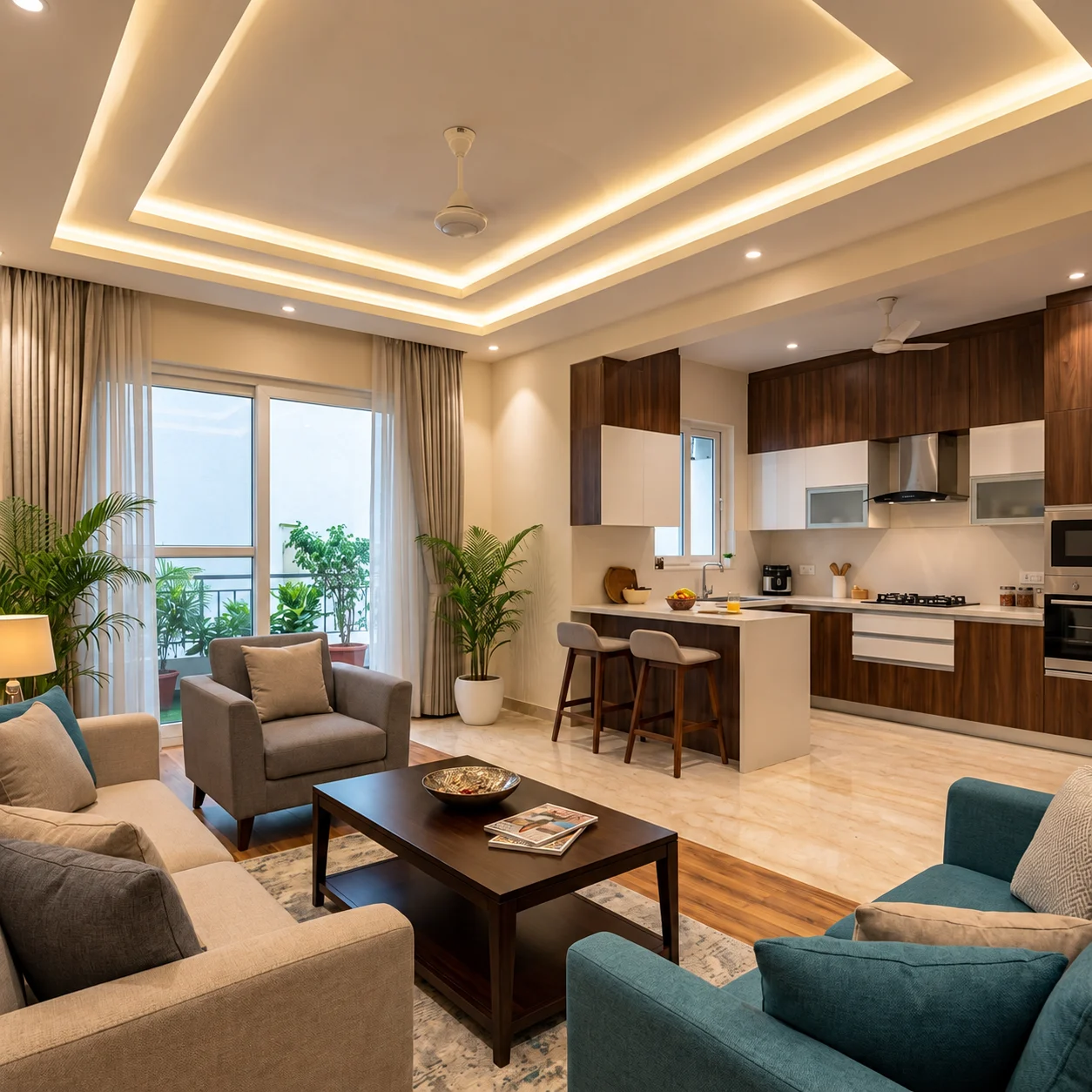
Once you have fixed a number in your head ₹30 lakh, ₹40 lakh, ₹50 lakh the harder question is where...
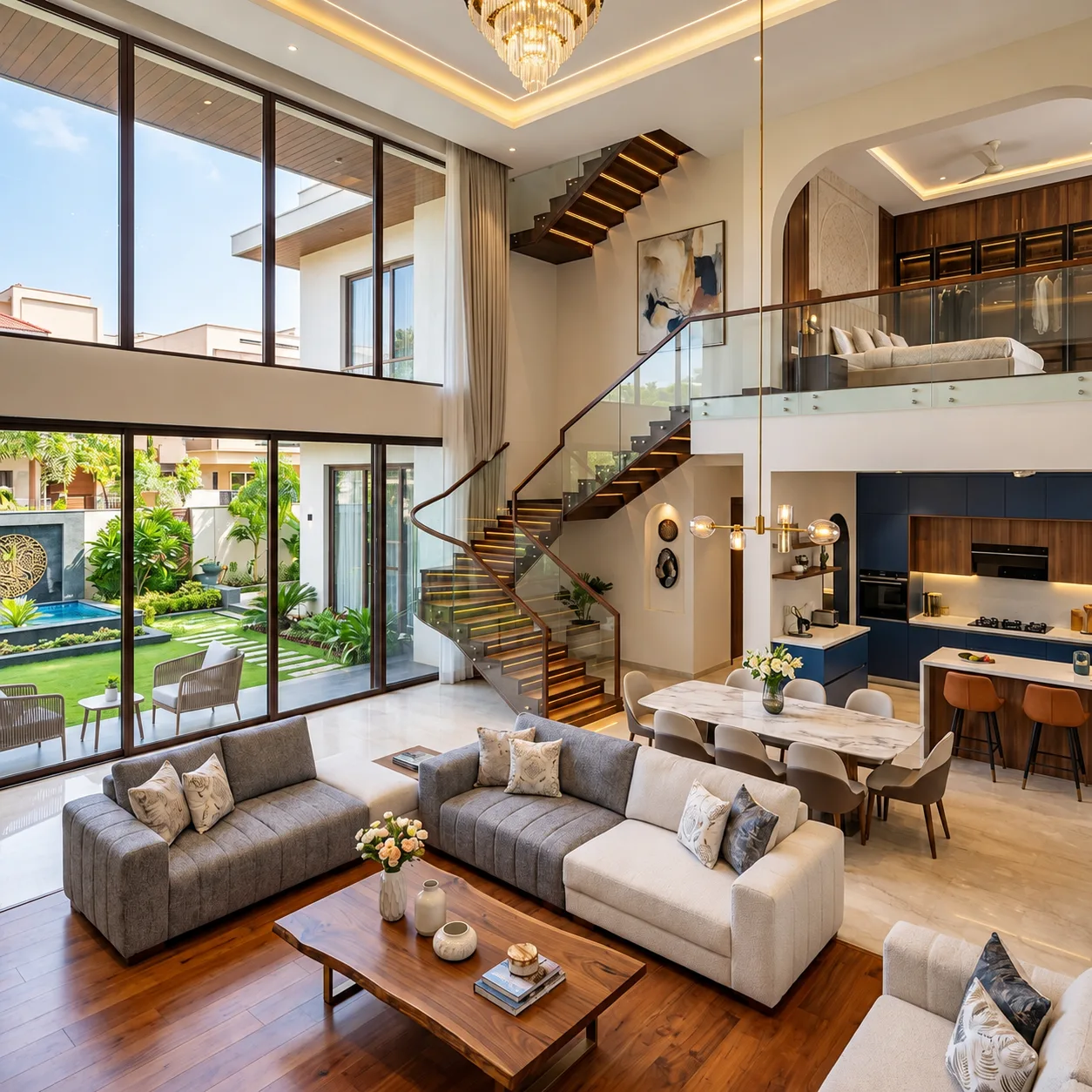
If you have started asking around, you already know the answer is not one clean number. A 4BHK villa interior...
Transform your vision into a cohesive, timeless space with Bangalore's award-winning design studio.
Book Your Free Consultation